A look at the criteria for choosing an oil seal based on shaft diameter, rotational speed and working fluid type.
Choosing the right oil seal is one of the key decisions in the design, repair and maintenance of rotating assemblies, from industrial electric motors to vehicle gearboxes and hydraulic pumps. Although an oil seal looks like a small and relatively inexpensive part, a wrong choice can lead to early leakage, contamination reaching the bearing, loss of efficiency and, in the end, complete failure of the gearbox or motor. In many cases an industrial plant discovers that the real cause of an unexpected production-line stoppage was not a complex mechanical failure but an oil seal costing only a few tens of thousands of tomans that was never matched to the real operating conditions in the first place. Counting the equipment's downtime, labor and the risk of damage to more expensive neighboring parts such as the bearing or gearbox, the cost of stopping a line to replace such a part is usually many times the cost of the part itself. For this reason, understanding the technical criteria for choosing an oil seal before placing a purchase order is a small investment that prevents larger costs and unexpected operational crises. In the rest of this guide we look at the five main selection criteria in detail, to make the decision easier for technical and purchasing teams.
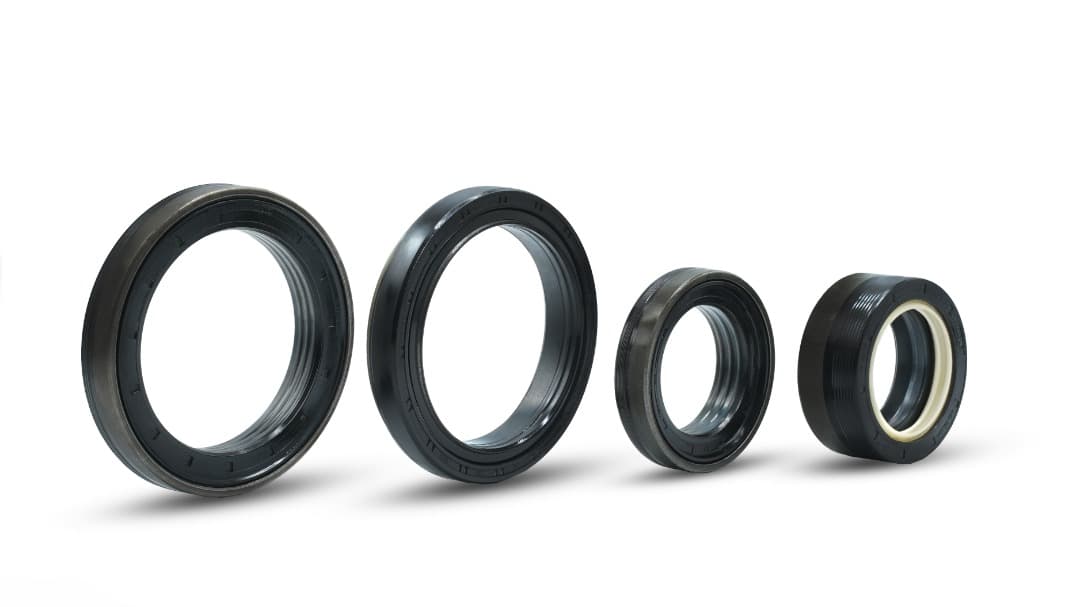
The first and most basic selection criterion is an exact match between the oil seal's dimensions and the shaft and housing. Three main sizes must conform fully to the technical standards: the inner diameter, which sits on the shaft surface; the outer diameter, which fits inside the bore or housing; and the oil seal's thickness. Even a half-millimeter difference in the inner diameter can cause either excessive compression of the sealing lip or, conversely, looseness and incomplete sealing; in the first case extra friction quickly wears the lip, and in the second a slight leak appears from the first day of installation and gradually worsens. Besides the three main sizes, the shaft's surface finish (surface roughness, or Ra) also plays an important role in the life of the sealing lip; a surface that is too smooth reduces lubrication of the lip, and one that is too rough wears the rubber quickly. For accurate measurement, it is advisable to rely on the equipment manufacturer's technical drawing or the official catalog of the reference brand rather than on a hand caliper in workshop conditions, where measurement error is high. To give customers confidence, IranSeal provides the technical drawing and standard dimensions of every product code in its online product catalog, so that human error at the ordering stage is kept to a minimum.
Shaft rotational speed directly affects the heat generated at the sealing lip and how quickly it wears. The higher the linear speed of the shaft surface under the sealing lip, the greater the friction and therefore the local heat generated; if this heat is not dissipated properly, it can change the mechanical properties of the rubber over time. At low to medium speeds, standard oil seals with an ordinary steel spring are usually sufficient and no special design is needed. In high-speed applications such as industrial electric motors, small turbines or machine tool spindles, however, friction at the sealing lip rises quickly, and if the oil seal's material and design are not suited to these conditions, the local temperature at the lip can climb high enough for the rubber to harden and become brittle, lose its elasticity and develop fine cracks on its surface. For these applications, oil seals with a low-friction design, a narrower lip and sometimes a PTFE coating are recommended, which both reduce friction and offer higher heat resistance. Consulting the supplier's technical team and giving the exact working speed in revolutions per minute is usually the best way to choose correctly at this stage, since manufacturers' standard selection tables are built around this very parameter.
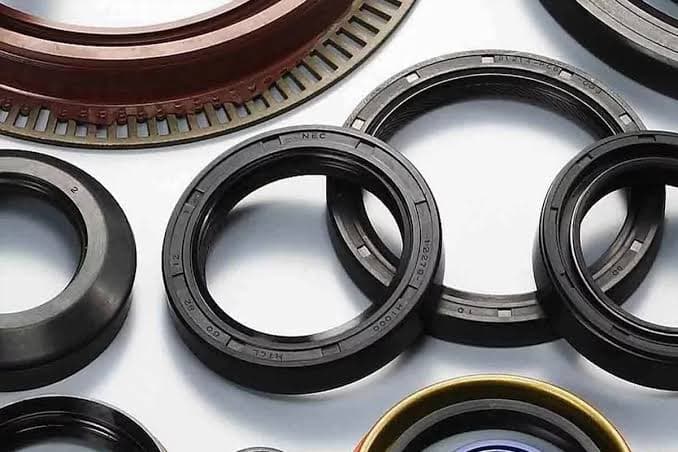
The oil seal's rubber must be fully compatible with the fluid it contacts, whether oil, grease, water or hydraulic fluid, and with the operating temperature range. Chemical incompatibility can cause the rubber to swell, harden or crack early, even when the oil seal's dimensions and design are chosen entirely correctly; this kind of failure is often misleading because at first glance the part appears to have failed for mechanical reasons, when the real cause was a gradual chemical reaction between the rubber compound and the working fluid. The three most common materials on the market are:
Alongside choosing the material, the real operating temperature near the sealing lip must be considered, not just the ambient temperature; in much equipment the local temperature near the oil chamber, because of its proximity to the engine or internal friction, is noticeably higher than the surrounding air, and if this is not taken into account, even a correctly chosen material wears out ahead of time.
Although ordinary oil seals are designed mainly for sealing at low pressure, in some applications, such as small hydraulic pumps, internally pressurized gearboxes or gear housings with limited venting, the internal pressure can temporarily or permanently exceed the normal level, and special medium- or high-pressure oil seals must be used. Using a standard oil seal in such conditions can lead to the sealing lip being pushed out of its groove, the rubber extruding into the gap between the parts and, in the end, tearing and rapid leakage; this kind of failure usually happens much faster than ordinary gradual wear and can appear within days of start-up. Checking the product's technical datasheet to confirm the permissible pressure rating before purchase is essential, and if there is any doubt it is better to consult the supplier's technical team so that a standard oil seal is not chosen for a high-pressure application.
The equipment's working environment also plays an important role in the choice. In environments with a lot of dust, high humidity or exposure to water spray, such as road-building, mining or agricultural machinery, an ordinary single-lip oil seal is usually not enough, because its only job is to keep oil in and it offers no protection against contamination entering from outside. In such conditions, a double-lip oil seal, which in addition to the main oil-sealing lip has a secondary lip to keep out dust, abrasive particles and moisture, is a safer choice. Even a small amount of abrasive particles entering the oil chamber can, over time, scratch the bearing and shaft surfaces and shorten the life of the whole assembly. Although a double-lip oil seal costs slightly more, in the long run this extra cost is quickly recovered through fewer repairs and fewer unexpected equipment stoppages, and it counts as the more economical option when calculating the Total Cost of Ownership.
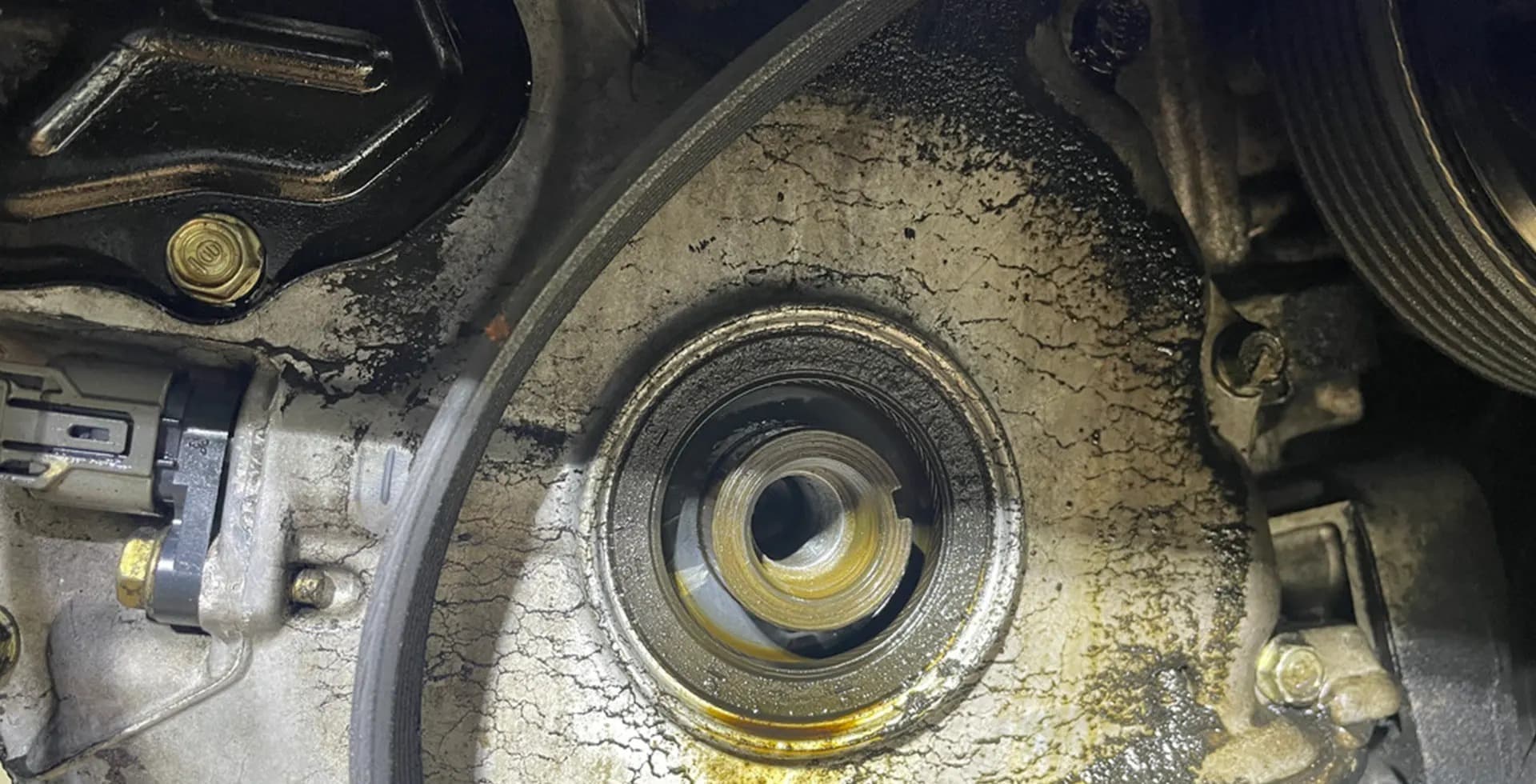
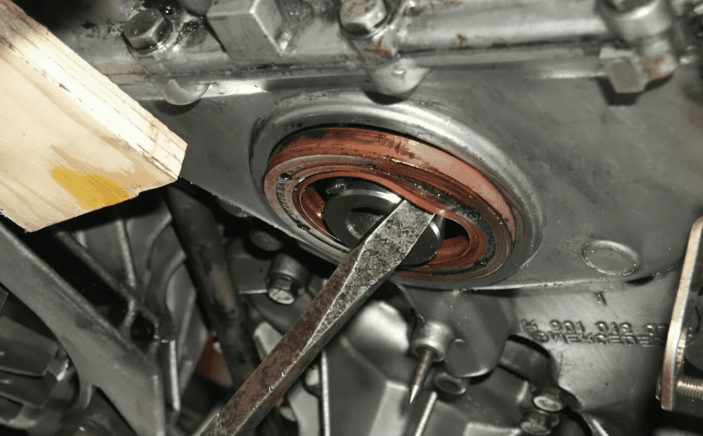
Even the best oil seal on the market will have a short service life if it is not installed correctly, and all the care taken in choosing the material and dimensions comes to nothing. Damage to the sealing lip as it passes over a thread or a shaft keyway is one of the most common causes of early leakage and has nothing to do with the quality of the part itself; this kind of damage is usually so slight that it is not visible in an initial visual inspection but leads to leakage in the first hours of the equipment's operation. It is recommended to always use a guide sleeve or a suitable lubricant during installation and, where no standard guide sleeve is available, to use at least Teflon tape or a temporary protector over the sharp edges along the path.
Choosing the right oil seal is the result of considering five criteria at once: dimensions, rotational speed, fluid type and temperature, operating pressure and environmental conditions, not merely choosing by price or by resemblance to the previous part. Overlooking any one of these criteria, even if the other four are met correctly, can sharply reduce the part's service life. In the end, consulting the technical team and giving a reputable supplier the exact specifications of the application is the surest way to choose correctly and to avoid the hidden costs of unexpected equipment stoppages.